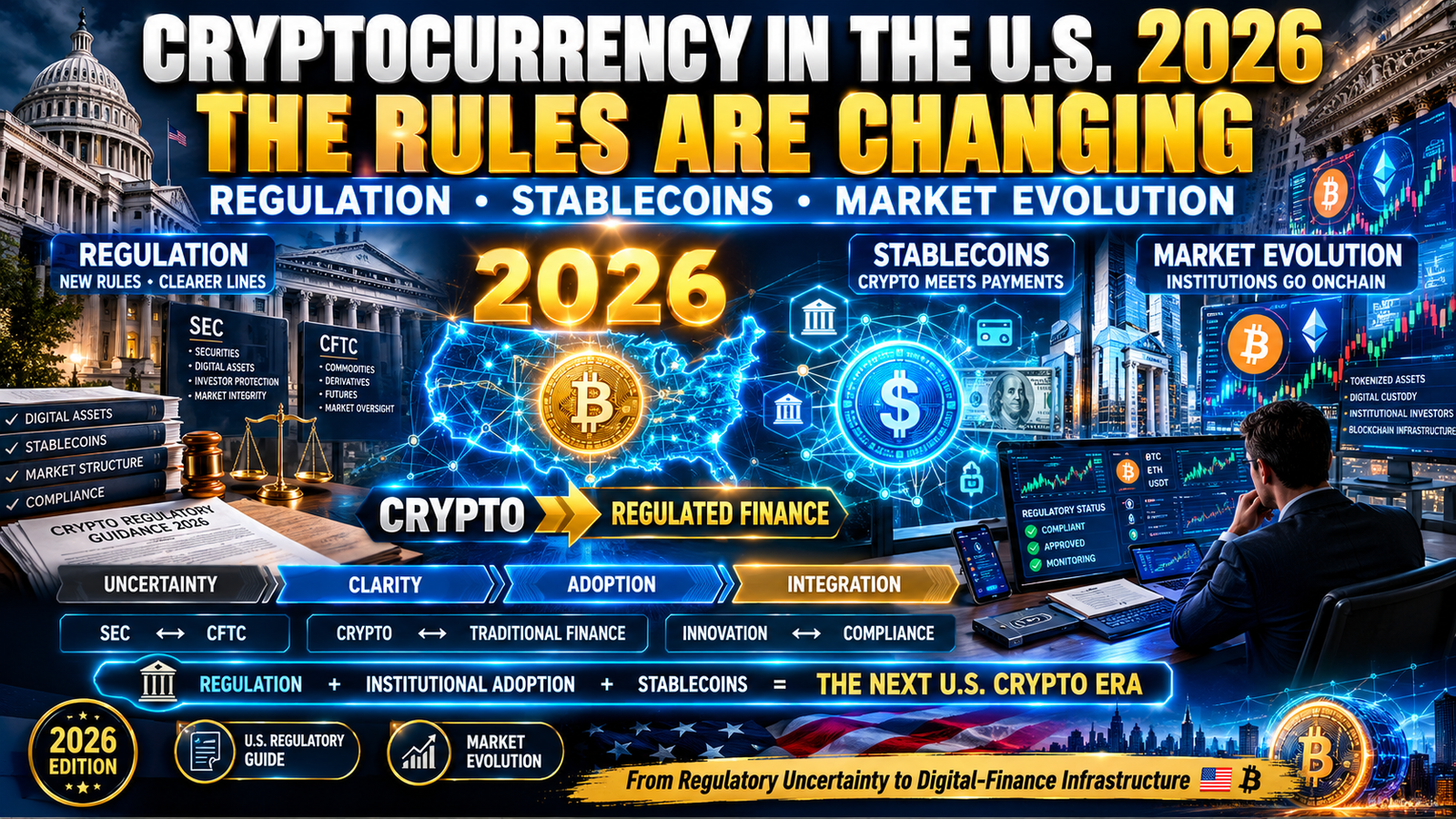
The cryptocurrency industry in the United States has undergone a remarkable transformation, evolving from a regulatory grey area into a mainstream financial sector with clearly defined oversight. With approximately 67 million Americans now owning digital assets, cryptocurrency has firmly established itself as a significant component of the national financial ecosystem . This comprehensive guide explores the current state of cryptocurrency in the United States, examining the regulatory developments, institutional adoption, and market trends that are shaping the future of digital finance.
The Regulatory Revolution: From Enforcement to Clarity
The CLARITY Act and Congressional Action
The Digital Asset Market Clarity Act of 2025, commonly known as the CLARITY Act, represents the most ambitious congressional response to the regulatory vacuum that has characterized American crypto oversight for years . At its core, this legislation classifies digital assets into three distinct categories, fundamentally reshaping how federal agencies approach cryptocurrency regulation.
Under the CLARITY Act framework, “digital commodities” are assets intrinsically linked to a blockchain whose value derives from the network’s use, falling under the exclusive jurisdiction of the Commodity Futures Trading Commission (CFTC). “Investment contract assets” are tokens sold with the expectation of profit derived from others’ efforts, remaining under Securities and Exchange Commission (SEC) oversight during their initial offering phase. Meanwhile, “permitted payment stablecoins” are governed by the GENIUS Act, signed into law in July 2025 .
The legislation has progressed through Congress with significant momentum. After passing the House by 294 votes to 134 in July 2025, the measure advanced from the Senate Banking Committee in May 2026 by a 15-9 vote . However, the path forward remains challenging. A critical procedural vote scheduled for September 15, 2026, requires 60 senators to support cloture—a threshold that necessitates bipartisan cooperation given that Republicans hold only 53 seats .
Ripple Chief Legal Officer Stuart Alderoty has urged senators to hear directly from the estimated 67 million American crypto holders before casting their votes, emphasizing that individual holders deserve representation alongside industry lobbyists and executives . The advocacy group Stand With Crypto reported that supporters contacted members of Congress nearly 50,000 times during August 2026 .
SEC and CFTC Joint Regulatory Framework
On March 17, 2026, the SEC and CFTC jointly issued Interpretive Release Nos. 33-11412, 34-105020, and 9198-26, establishing a comprehensive framework for applying federal securities laws to crypto assets . This formal interpretive rule carries materially greater weight than previous informal SEC proclamations and formally supersedes the agency’s 2019 Framework for “Investment Contract” Analysis of Digital Assets.
The release establishes five categories of crypto assets: digital commodities, digital collectibles, digital tools, stablecoins, and digital securities. Notably, Bitcoin, Ether, Solana, Dogecoin, and XRP have been confirmed as digital commodities, shifting primary oversight of these assets from the SEC to the CFTC . This clearer jurisdictional demarcation should reduce the parallel SEC and CFTC investigations that have characterized recent enforcement actions, with approximately 70% of digital assets traded today falling under CFTC jurisdiction .
Regulation Crypto Assets: New Offering Framework
The SEC’s August 2026 proposal of “Regulation Crypto Assets” marks perhaps the clearest step away from the agency’s prior enforcement-driven approach . This proposed framework would create tailored exemptions from Securities Act registration for certain offerings involving crypto assets, acknowledging that the existing securities framework was not well suited to the distinctive features of crypto transactions .
The proposal includes two new registration exemptions: a one-time exemption permitting offerings of up to $5 million during a four-year period, and a fundraising exemption allowing up to $75 million during each 12-month period . Both would require principles-based narrative disclosures, with the larger exemption carrying additional financial-statement and ongoing-reporting requirements .
SEC Chairman Paul S. Atkins has framed this initiative as part of a broader effort to “onshore innovation in crypto asset markets for generations to come” . Importantly, the proposal also includes a conditional safe harbor from the term “investment contract” in the definitions of “security,” providing a pathway for crypto assets to exit securities law coverage once an issuer has completed or permanently ceased essential managerial efforts .
Banking Sector Integration: Traditional Finance Meets Digital Assets
National Bank Transformation
The integration of cryptocurrency services into traditional banking has accelerated significantly. In May 2026, United Texas Bank (UTB) completed its transformation from a Texas-chartered financial institution to a nationally chartered bank, enabling it to offer comprehensive cryptocurrency financial services . This strategic transformation places the Dallas-based bank on equal regulatory footing with major Wall Street institutions like Bank of America and JPMorgan Chase.
UTB’s national bank charter grants it full trust powers, direct access to the Federal Reserve’s wire transfer and automated clearing house systems, and FDIC insurance coverage . The bank already processes over $120 billion in annual transaction volume for reputable cryptocurrency companies, clearing $10 billion monthly for foreign banks, over-the-counter platforms, and major exchanges .
The bank’s proprietary compliance platform, UTB PRISM SENTINEL, enables continuous real-time blockchain monitoring to reduce compliance risks and address emerging regulatory requirements from frameworks like the GENIUS Act and CLARITY Act . UTB is also launching UTB Atomic, an AI-driven real-time payment network designed to rebuild the round-the-clock liquidity infrastructure that disappeared following the collapses of Silvergate Bank and Signature Bank .
Office of the Comptroller of the Currency Guidance
Throughout 2025 and 2026, the Office of the Comptroller of the Currency (OCC) issued a series of interpretive letters clarifying the scope of permissible digital asset activities for national banks . These developments have progressively expanded the boundaries of what traditional financial institutions can offer in the cryptocurrency space.
Interpretive Letter 1186, issued in November 2025, confirmed that national banks may pay blockchain network fees in connection with otherwise permissible activities and may hold digital assets as principal in amounts necessary for reasonably foreseeable payments . The following month, Interpretive Letter 1188 clarified that national banks may engage in riskless principal digital asset transactions on behalf of customers, entering into offsetting trades without retaining market exposure .
Additionally, the Federal Reserve has replaced its restrictive 2023 policy statement on novel activities, adopting a principles-based approach that generally permits insured state member banks to engage in activities permitted for national banks . This shift reflects an evolving understanding of cryptocurrency risks and a desire to facilitate innovation while preserving financial system stability.
Executive Order on Banking Integration
The White House issued an executive order in May 2026 aimed at eliminating regulatory barriers that disproportionately favored traditional banking institutions . The order directly addresses the phenomenon known as “banking strangulation,” where cryptocurrency companies historically faced denial of basic banking services under the justification of representing “high risk.”
The executive order sets strict timelines for regulators to reconfigure the current framework. Within 90 days, the FDIC and OCC must review custody licenses, potentially opening pathways for hybrid custodians where traditional banks offer checking accounts with integrated Bitcoin backed by institutional insurance . The Federal Reserve received a 120-day mandate to evaluate direct connectivity of digital asset service providers to central bank payment accounts, enabling cryptocurrency platforms to utilize real-time settlement infrastructure like ACH and FedWire .
American Crypto Ownership: A Mainstream Reality
Demographic Shifts in Cryptocurrency Adoption
The profile of the typical American cryptocurrency holder has undergone dramatic transformation. According to the National Cryptocurrency Association’s 2026 State of Crypto Holders Report, approximately 67 million Americans—roughly 25% of U.S. adults—now own some form of cryptocurrency . This represents a gain of 12 million holders in a single year, up from approximately 55 million in 2025 .
Perhaps most striking is the demographic diversification of cryptocurrency ownership. Construction and manufacturing workers now account for 21% of all crypto holders, outpacing the technology sector at 18% and dramatically exceeding finance professionals at just 8% . This shift challenges the persistent stereotype of cryptocurrency as the domain of young software engineers and Silicon Valley insiders.
Among first-time buyers in 2025 and 2026, 42% are women—a meaningful increase from the 34% female share among earlier adopters. Nearly 28% of new holders are over 55, a demographic that the cryptocurrency industry spent years trying to reach with limited success .
Practical Use Cases Driving Adoption
The survey of 10,000 cryptocurrency holders conducted between February and March 2026 reveals that practical utility is increasingly driving adoption. Among respondents, 41% reported using cryptocurrency to send money to family and friends, while 40% indicated using it for shopping and payments .
Over half of cryptocurrency holders earn under $150,000 in household income, with nearly a quarter earning below $75,000 . This income distribution underscores that cryptocurrency has moved beyond a niche investment vehicle for the wealthy to become a practical financial tool for middle- and working-class Americans.
Ripple CEO Brad Garlinghouse has argued that this mainstream adoption carries significant political implications. With one in four American adults holding cryptocurrency, lawmakers who recognize tens of millions of constituents as crypto holders may approach regulation differently . The user base spanning every major industry makes treating cryptocurrency as a niche concern increasingly difficult for regulators .
Market Outlook and Key Considerations
Legislative Timeline and Uncertainty
Despite significant progress, the CLARITY Act’s path to enactment remains uncertain. Polymarket traders currently place the odds of the bill being enacted in 2026 at just 15%, reflecting concerns that the limited legislative calendar and November elections could make passage difficult . The September 15 cloture vote represents a critical gatekeeping test—failure to secure 60 votes would essentially kill the bill for 2026 .
Outstanding issues requiring resolution include government ethics provisions, law enforcement considerations, and stablecoin yield and rewards . Banking organizations, including the Independent Community Bankers of America, have campaigned against provisions they believe could allow digital tokens to compete with bank deposits and reduce funds available for lending .
The Path Forward
The cryptocurrency industry in the United States stands at an inflection point. The convergence of congressional legislation, SEC rulemaking, banking sector integration, and mainstream adoption has created unprecedented momentum toward regulatory clarity. However, significant challenges remain, including the need for bipartisan cooperation in the Senate, resolution of outstanding policy disputes, and continued evolution of regulatory frameworks to address emerging technologies.
For investors and market participants, understanding this evolving landscape is essential. The shift from “regulation by enforcement” to prospective rulemaking provides greater certainty for capital formation and innovation while preserving investor protections . The integration of cryptocurrency services into traditional banking expands access and legitimacy while raising new questions about risk management and consumer protection.
As SEC Chairman Atkins has emphasized, these regulatory developments represent “a beginning and not the end” . The coming months and years will determine whether the United States can successfully balance innovation, investor protection, and financial stability in the rapidly evolving cryptocurrency sector. What remains clear is that cryptocurrency has irrevocably entered the mainstream of American finance, and the regulatory framework being constructed today will shape the industry for generations to come.